

 中文
中文 Login
Login


Laboratory of planetary mineral catalysis and organic evolution
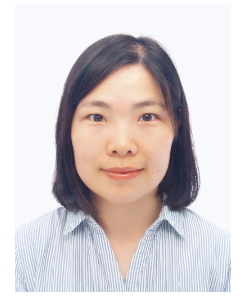
PI Yamei Li,Specially appointed professor
School of Earth and Space Sciences, University of Science and Technology of China
Email: yamei.li@ustc.edu.cn
Research interest
Keywords: meteorite organic chemistry; mineral-facilitated prebiotic chemical evolution; origin of life; Evolution from mineral to enzyme; Geo-electrochemistry; Water/rock reaction
My main research interests are organic chemistry in the early Solar System and prebiotic chemistry.
In the field of early Solar System organic chemistry, my research focuses on the synthesis and evolutionary mechanisms of organic matter in meteorites, with particular emphasis on the evolutionary pathways of life-related organic molecules. By combining laboratory simulation experiments with sample analyses, I aim to elucidate the rules governing organic matter evolution in meteorites and asteroids, and to evaluate the contribution of extraterrestrial materials, such as meteorites, to the origin of life.
In the field of prebiotic chemistry, my research focuses on mineral-facilitated redox conversions and non-equilibrium thermodynamics-driven carbon and nitrogen fixation processes in deep-sea hydrothermal systems. I am particularly interested in the role of transition metal-bearing minerals in catalyzing the transformation between inorganic and organic matter, with the aim of constructing an evolutionary framework from inorganic minerals to biological enzymes.
Representative Achievements
The material sources for the origin of life on Earth are generally considered to include both endogenous and exogenous sources. I have investigated both directions and developed an understanding of their differences and complementarity. By introducing the principles of non-equilibrium thermodynamics into geochemistry, my postdoc supervisor (Prof. Ryuhei Nakamura) proposed a model of chemical evolution in thermodynamically disequilibrium systems, in which proton concentration gradients (pH gradients) and hydrogen concentration gradients (Eh gradients) generated by water–rock interactions serve as low-temperature non-equilibrium thermodynamic driving forces. Inspired by this concept, I applied cosmo-electrochemistry to understand the organic evolution on the parent bodies of carbonaceous chondrites and asteroids.
The main scientific achievements are as follows: 1) We explored low-temperature decomposition pathways of amino acids mediated by mineral catalysis, and clarified the dominant role of these decomposition pathways on meteorite parent bodies; 2) We quantitatively analyzed the distributions of amino acids and their decomposition products in different carbonaceous chondrite subtypes (CI, CR, and CM), as well as in returned samples from the asteroid Ryugu and Bennu. At the molecular level, these results verified that CI chondrites and the Ryugu returned samples may have originated from the same type of parent body and Ryugu and Bennu show distinct evolutions; 3) We revealed the molecular mechanism of ammonia production catalyzed by molybdenum-bearing sulfide minerals in deep-sea hydrothermal vent environments, as well as its evolutionary connection with biological enzymes.
Awards
Directors Achievement Award from the Earth-Life Science Institute, Institute of Science Tokyo, in 2019 and 2022
Grants
National Natural Science Foundation Excellent Young Scientists Fund Program (Overseas), PI, 2025/06-2028/7
Japan Society for the Promotion of Science (JSPS) Grant-in-Aid for Early-Career Scientists
JSPS Grant-in-Aid for Scientific Research on Innovative Areas
JSPS Grant-in-Aid for Transformative Research Areas
Courses
Earth and Life Science Course A (English), two lectures
Representative papers
Organic evolution on carbonaceous chondrites and asteroids
Y. Li*, et al., Co-evolution of insoluble organic matter and silicate minerals driven by electrochemistry on the parent bodies of carbonaceous chondrites, under review
Yamei Li*, Norio Kitadai, Jinfei Yu, Pengfei Zhang, Extraterrestrial amino acids evolve differently in asteroid Bennu and Ryugu: possible mechanisms and future perspectives, Fundamental Research, Accepted. Ryugu and Bennu asteroids are highly similar in terms of petrography, elemental composition, and isotopic composition; however, their amino acid distributions differ markedly. We discussed the possible causes of this difference and provided perspectives on future asteroid exploration and Martian moon exploration.https://doi.org/10.1016/j.fmre.2026.05.016
Yamei Li*, Hiroyuki Kurokawa, Yasuhito Sekine, Yoko Kebukawa, Yuko Nakano, Norio Kitadai, Naizhong Zhang, Xiaofeng Zang, Yuichiro Ueno, Gen Fujimori, Ryuhei Nakamura, Kosuke Fujishima, Junko Isa et al., Aqueous breakdown of aspartate and glutamate to n-ω-amino acids on the parent bodies of carbonaceous chondrites and asteroid Ryugu, Science Advances, 2023, 9, eadh7845 We quantitatively analyzed the reported distributions of amino acids and their decomposition products in different carbonaceous chondrite subtypes (CI, CR, and CM), as well as in returned samples from asteroid Ryugu. At the molecular level, these results demonstrated that CI chondrites and the Ryugu returned samples may have originated from the same type of parent body.
Y. Li*, N. Kitadai, Y. Sekine, H. Kurokawa, Y. Nakano, K. Johnson-Finn, Geoelectrochemistry-driven alteration of amino acids to derivative organics in carbonaceous chondrite parent bodies, Nature Communications 2022, 13(4893). We explored low-temperature decomposition pathways of amino acids mediated by mineral catalysis, and clarified the dominant role of these decomposition pathways on meteorite parent bodies.
Prebiotic chemical evolution towards origin of life
Copper-rich deep-sea hydrothermal vent minerals facilitate hydrogen cyanide formation from glycine, Ryuhei Nakamura*, Zening Yang, Yamei Li*, Yanjing Lu, Akira Yamaguchi, Kiyohiro Adachi, Masahiro Yamamoto, Daisuke Hashizume, Preprint on Research Square, https://doi.org/10.21203/rs.3.rs-8994779/v1 How to obtain HCN in deep-sea hydrothermal vent environment?
Nickel Incorporation into Fresh Iron Sulfide Precipitates Modulates Selectivity in Nitrite, Carbon Dioxide, and Proton Reduction. Felipe Garibello, Shawn Erin McGlynn, Yamei Li, François Malherbe, Daniel Eldridge, Alexandr N. Simonov, Rosalie K. Hocking*, Inorganic Chemistry, 2025, 64(46), doi: 10.1021/acs.inorgchem.5c03810
Zening Yang, Yamei Li*, Norio Kitadai, Masahiro Yamamoto, Yuichiro Ueno, Yanjing Lu, Ailong Li, Kiyohiro Adachi, Akira Yamaguchi, Daisuke Hashizume, Ryuhei Nakamura*, Mineral-facilitated aqueous synthesis of hydrogen cyanide from prebiotically abundant amino acids for chemical evolution, PNAS, 2026, 123(13), doi: 10.1073/pnas.2515805123 Prebiotic chemistry relies on highly reactive carbon and nitrogen sources, such as HCN. We investigated how these fundamental building-block molecules can be synthesized and efficiently recycled within reaction networks?
Our work was highlighted in a PNAS commentary by Professor Martin Rahm, who suggested that our findings may help resolve a long-standing question: how could the synthetic precursors of life have accumulated on the early Earth? Did it all begin with hydrogen cyanide?
Preprint:Yang Z, Li Y*, Kitadai N, Yamamoto M, Ueno Y, Nakamura R*. Hydrogen cyanide generation from amino acids for prebiotic evolution. ChemRxiv. 2025; doi:10.26434/chemrxiv-2025-8wlmn
Y. Li, A. Yamaguchi, M. Yamamoto, K. Takai, R. Nakamura*, Molybdenum sulfide: a bioinspired electrocatalyst for dissimilatory ammonia synthesis with geoelectrical current, Journal of Physical Chemistry C. 2017, 121 (4), 2154–2164 Energy metabolism and material synthesis in life depend largely on electron transfer. Before biological enzymes had evolved, minerals may have served as electron donors, electron acceptors, and/or electron mediators. What is the molecular mechanism underlying this role?
T. Altair, V. Sojo ,Y. Li, S. McGlynn, D. Galante, H. Varela, R. Hudson. Carbon reduction powered by natural electrochemical gradients under submarine hydrothermal vent conditions, Journal of the American Chemical Society, 2025, 147(32) Alkaline hydrothermal vents are considered to have provided early non-equilibrium thermodynamic conditions. The interface among hydrothermal fluids, chimney minerals, and the ocean naturally maintained pH and Eh gradients analogous to those across biological membranes. Under such conditions, how did early carbon fixation occur?
Zhong. Y., Zhang., N., Huan, D., Low, J., Daniel, I., Cleaves, H.J., Zhang, C., Li, Y., Jiang, Y., Wang, X., Glein, C.R., Li, J., Bai, Y., Li, Y., Huang, F., Qin, L., Knoll, A.H., Hao*, J., Long, R., Xiong, Y. Abiotic CO2 reduction promoted by carbonate and phyllosilicate minerals on the primitive seafloor. Nature Communications., 2026 Geo-electrochemistry can drive carbon fixation using carbonate and phyllosilicate minerals as catalysts.
Evolution from mineral to enzyme
Y. Li*, Y. K. Go, H. Ooka, D. He, F. Jin, S. H. Kim*, R. Nakamura*, Enzyme mimetic active intermediates for nitrate reduction in neutral aqueous media, Angewandte Chemie International Edition 2020, 59(24), 9744-9750 Many important biological enzymes use transition metal elements and sulfur-containing ligands as their active centers. Do sulfide minerals therefore exhibit structural and functional similarities to these enzymes? We monitored and resolved the structures of key active species using in situ Raman spectroscopy and quasi-in situ EPR spectroscopy.
Y. Li*, N. Kitadai, R. Nakamura*, Y. Li, N. Kitadai, R. Nakamura, Chemical Diversity of Metal Sulfide Minerals and Its Implications for the Origin of Life, Life 2018, 46(8).
Y. Li, R. Nakamura*, Structural change of molybdenum sulfide facilitates the electrocatalytic hydrogen evolution reaction at neutral pH as revealed by in situ Raman spectroscopy, Chinese Journal of Catalysis 2018, 39, 401–406.We used in situ Raman spectroscopy to resolve the dynamic structural changes of sulfides during electrochemical catalytic hydrogen production.
Other coauthored papers:
1. Maxwell L. Craddock, Yasuhito Sekine, Maryse Napoleoni, Nozair Khawaja, Shuya Tan, Yamei Li, Zening Yang, Lucía Hortal Sánchez, Ruiqin Yi, Frank Postberg, Laboratory simulations of organic synthesis in Enceladus: Implications for the origin of organic matter in the plume,Icarus, 2025, 444, Doi: 10.1016/j.icarus.2025.116836
Join us!
Students and colleagues who are interested in our research are warmly welcome to contact us for academic exchange and discussion. Undergraduate students, graduate students, and postdoctoral researchers who wish to join our group are also welcome to contact us at any time.
Recruitment information for postdoctoral researchers and specially appointed associate research fellows with an expertise in astrobiology, geo-organic chemistry and mineral catalysis: University of Science and Technology of China — Recruitment of Specially Appointed Associate Research Fellows (Specially Appointed Senior Engineers) and Postdoctoral Researchers.
Undergraduate students are welcome to join the group and participate in research through undergraduate research training or innovation projects.