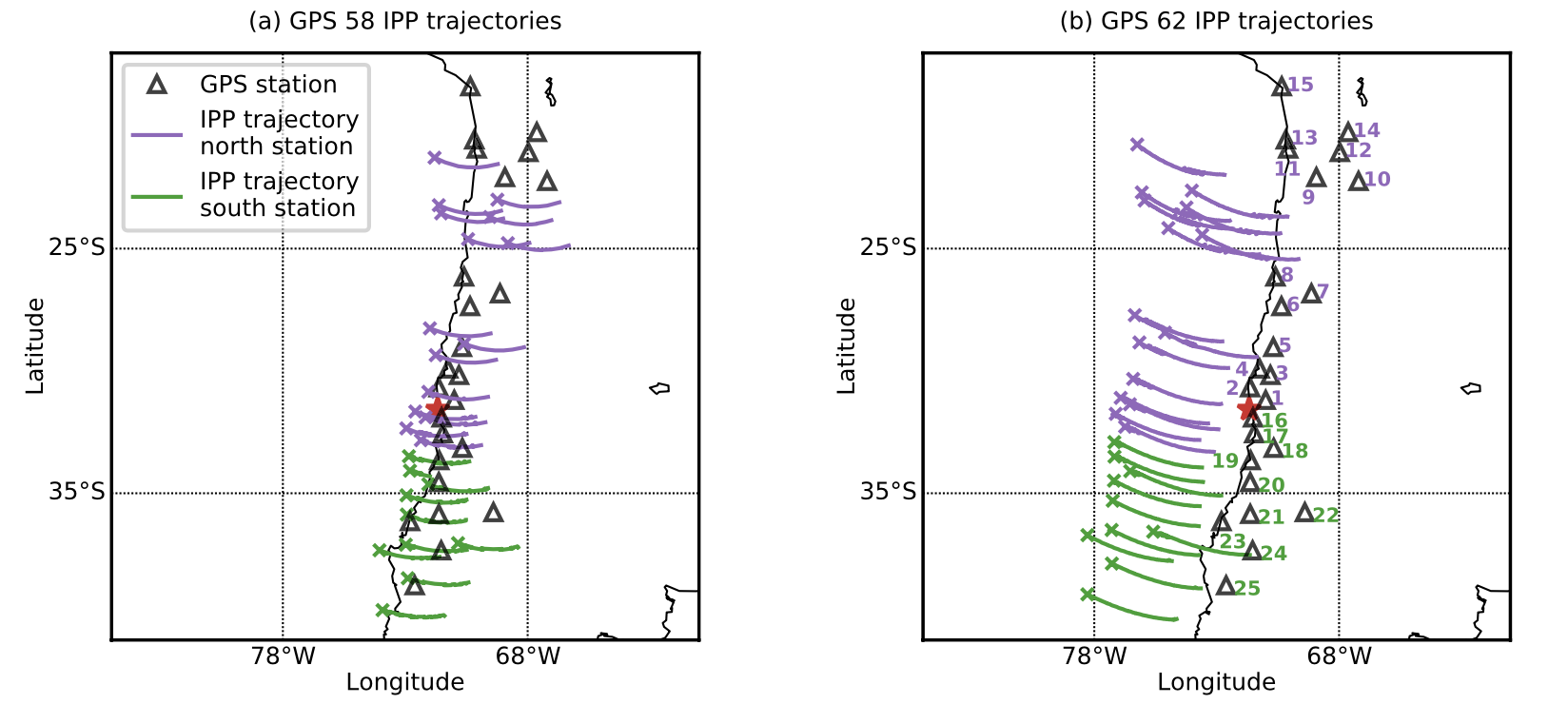
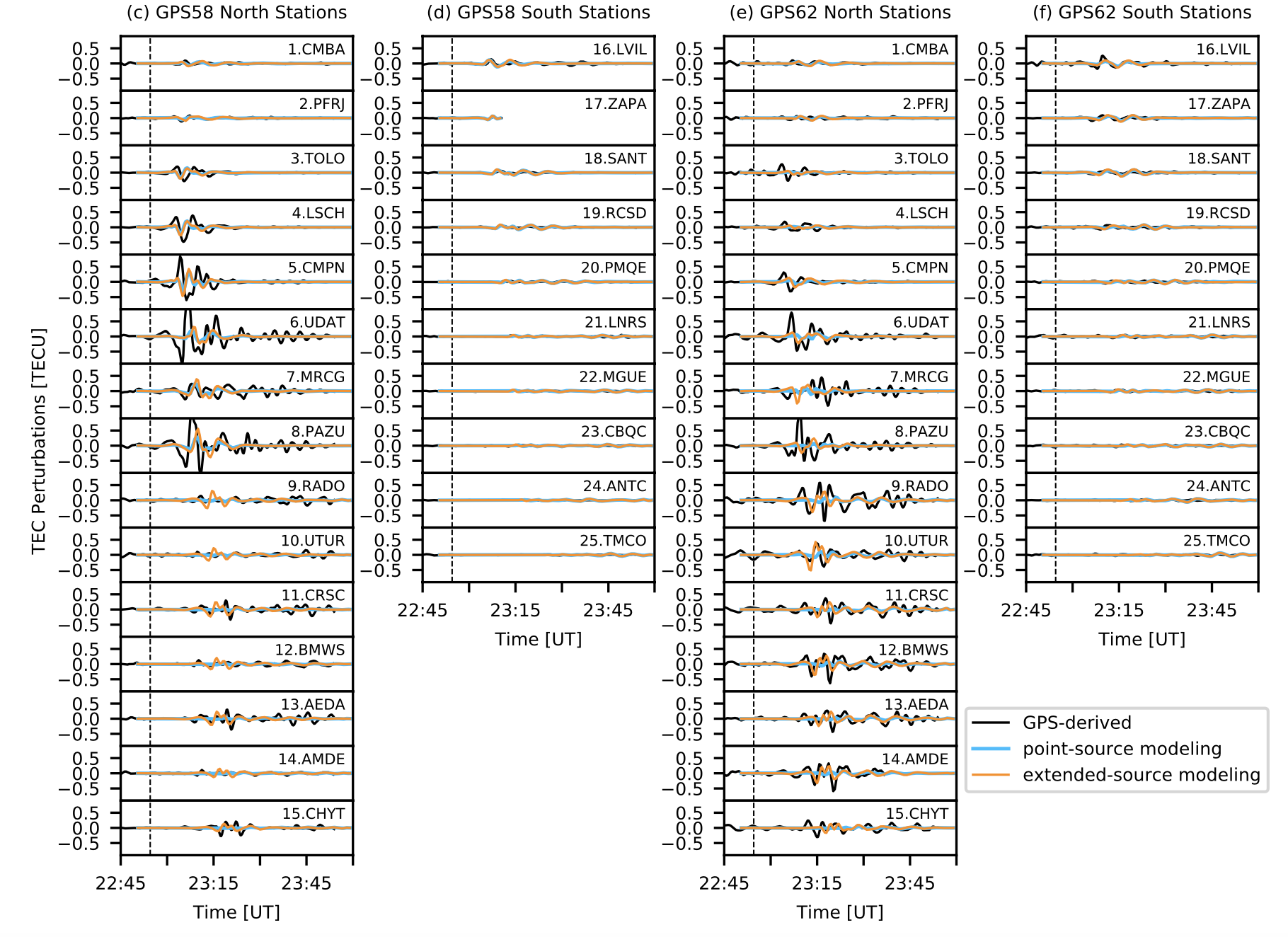
ResearchLithosphere-Atmosphere-Ionosphere CouplingImpulsive events at or near the surface of the Earth, such as earthquakes, tsunamis, volcanic eruptions, tropical cyclones, and tornadoes, can generate atmospheric acoustic-gravity waves that propagate upward into the upper atmosphere. This leads to disturbances in the thermosphere and ionosphere, which have been observed extensively. We aim to better characterize the upper atmospheric responses to surface impulsive events and understand the physical mechanism of the lithosphere-atmosphere-ionosphere coupling.
Selected Publications:
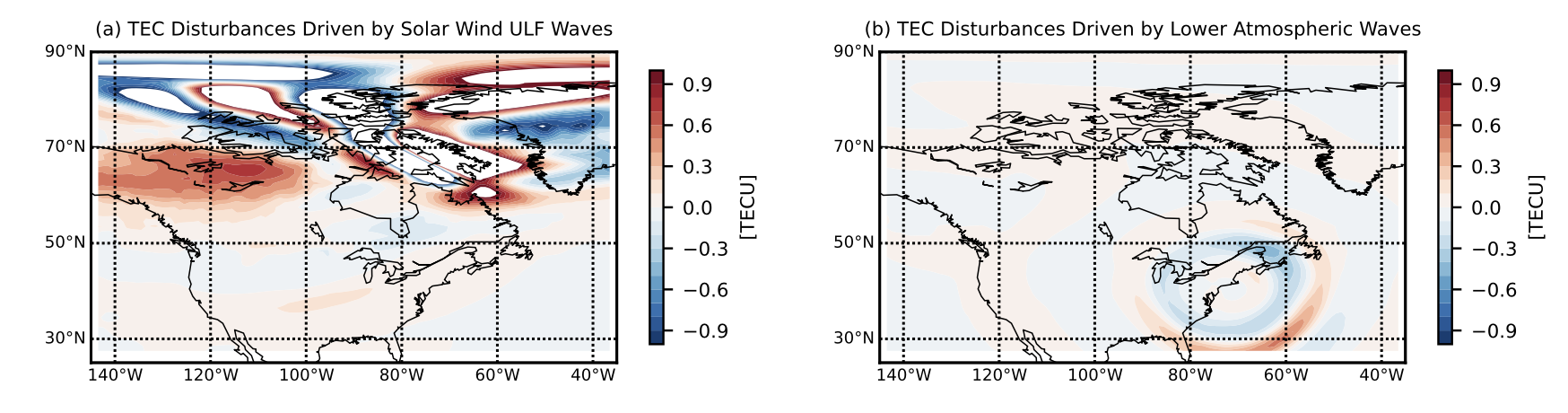
Solar Wind-Magnetosphere-Ionosphere CouplingSmall-scale and mesoscale ionospheric disturbances can be triggered by the solar wind and magnetospheric conditions. We aim to better understand the energy transfer process from the solar wind and the magnetosphere to the ionosphere on finer spatiotemporal scales, as well as to differentiate the ionospheric disturbances driven from above and from below.
Selected Publications:
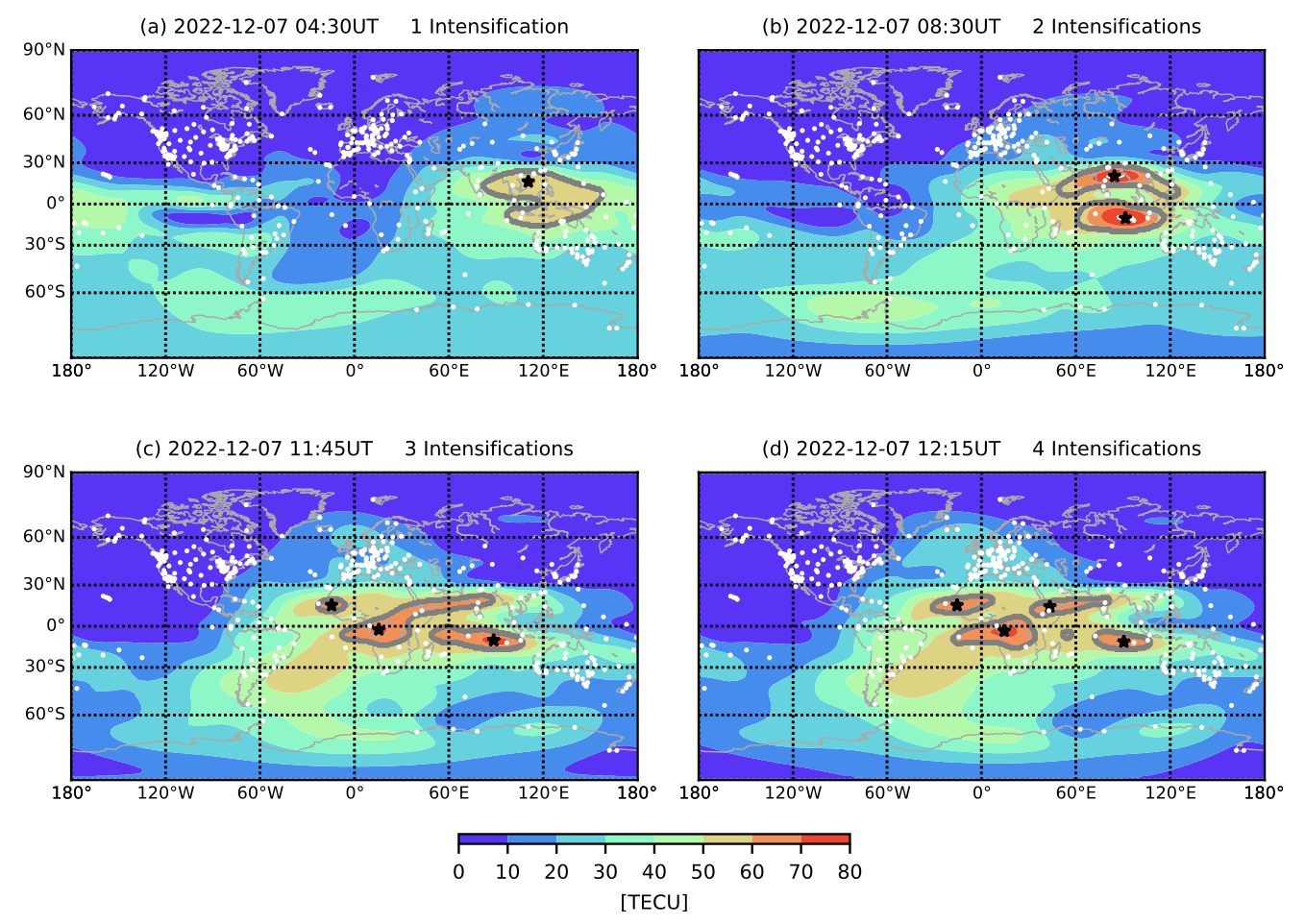
Global Ionospheric StructuringGlobal Ionospheric Maps (GIMs) spans over decades and contains rich information about the ionosphere state, particularly the comprehensive longitudinal and latitudinal variations of the Total Electron Content (TEC). Using image processing tenchiques, large-scale TEC structures can be identified and extracted from millions of GIMs, allowing for statistical characterization of the global ionosphere. Meanwhile, information theoretical approaches are applied to quantifying the nonlinear relationship between the large-scale TEC structures and the forcings from the lower atmosphere and the Sun/solar wind/magnetosphere.
Selected Publications:
|
|