

扫描手机二维码
开通时间:..
最后更新时间:..
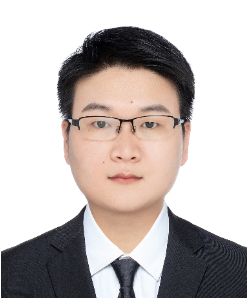
的个人主页 http://faculty.ustc.edu.cn/guqq/zh_CN/index.htm

本课题组主要面向 AI for Science 与计算材料科学,发展人工智能辅助的材料电子结构建模方法及其在功能材料和纳米器件中的应用。重点研究方向包括机器学习电子哈密顿量与深度学习紧束缚模型、等变神经网络与量子算符建模、大尺度材料电子结构与有限温度物性模拟、机器学习电子结构方法与非平衡格林函数结合的器件量子输运模拟,以及面向科学计算的智能体与自动化工作流。相关方法主要服务于半导体、低维材料、拓扑材料、光电材料和纳米电子器件等体系的高效模拟与机理研究。
主要论著:
[1] S. Yang, S. K. Pandey, Z. Zhouyin, and Q. Gu†, Deep neural network for phonon-assisted optical spectra of semiconductors at finite temperatures, npj Computational Materials (2026).
[2] N. Chen, X. Liang, F. Chen, A. Guo, J. Moser, T. Wu, L. Nian, L. Ji, F.-S. Li, J. He, T. Zhang, J.-H. Jiang, Q. Gu, and D. Chen, High-field tunneling electroluminescence via orbital-selective emission in BSCCO/WSe₂ heterostructure, Applied Physics Letters 128, 182103 (2026).
[3] D. Mingwei, C. Huang, Y. Hu, Y. Li, Z. Lu, X. Yu, D. Zhang, W. Zhai, T. Zhu, Q. Gu, et al., Automating computational chemistry workflows via OpenClaw and domain-specific skills, arXiv:2603.25522 (2026). (JCTC accepted)
[4] A. Yang, D. Jin, M. Liu, D. Zheng, Q. Wang, Q. Gu, and J.-H. Jiang, Accelerating discovery of infrared nonlinear optical materials with large shift current via high-throughput screening, npj Computational Materials (2026).
[5] J. Zou, Z. Zhouyin, S. K. Pandey, and Q. Gu†, Review of machine learning tight-binding models: Route to accurate and scalable electronic simulations, Chinese Physics B 35, 017101 (2026).
[6] J. Zou, Z. Zhouyin, Z. Pandey, and Q. Gu†, Deep learning-based quantum transport simulations in two-dimensional materials, arXiv:2512.11291 (2025).
[7] L. Zhang, S. Chen, Y. Cai, J. Chai, J. Chang, K. Chen, Z. X. Chen, Z. Ding, Y. Du, Y. Gao, et al., Bohrium+ SciMaster: Building the infrastructure and ecosystem for agentic science at scale, arXiv:2512.20469 (2025).
[8] W. Zhou, D. Zheng, Q. Liu, D. Lu, Y. Liu, P. Lin, Y. Huang, X. Peng, J. J. Bao, C. Cai, et al., ABACUS: An electronic structure analysis package for the AI era, The Journal of Chemical Physics 163, 19 (2025).
[9] J. Zou, Z. Zhouyin, D. Lin, Y. Huang, L. Zhang, S. Hou, and Q. Gu†, Deep learning accelerated quantum transport simulations in nanoelectronics: from break junctions to field-effect transistors, npj Computational Materials (2025).
[10] Z. Zhouyin, Z. Gan, S. K. Pandey, L. Zhang, and Q. Gu†, Learning local equivariant representations for quantum operators, The Thirteenth International Conference on Learning Representations (ICLR), 2025.
[11] S. K. Pandey, S. Debnath, Z. Zhouyin, and Q. Gu†, Pitfalls of exchange–correlation functionals in description of magnetism: Cautionary tale of the FeRh alloy, Computational Materials Science 248, 113561 (2025).
[12] Q. Gu†, Z. Zhouyin, S. K. Pandey, P. Zhang, L. Zhang, and W. E, Deep learning tight-binding approach for large-scale electronic simulations at finite temperatures with ab initio accuracy, Nature Communications 15, 6772 (2024).
[13] Q. Gu†, S. K. Pandey, and Y. Lin, Computational exploration of a viable route to the Kitaev-quantum spin liquid phase in monolayer OsCl₃, Physical Review Research 6, 043309 (2024).
[14] H. Rong#, Q. Gu#, et al., Dominant charge density order in TaTe₄, Physical Review Letters 133, 116403 (2024).
[15] B. Hu, Y. Peng, X. Liu, Q. Li, Q. Gu, M. J. Krogstad, R. Osborn, T. Honda, J. Feng, and Y. Li, Absence of magnetoelastic deformation in the spin-chain compound CuBr₂, Physical Review B 110, 115142 (2024).
[16] Q. Gu†, S. K. Pandey, and R. Tiwari, A computational method to estimate spin–orbital interaction strength in solid state systems, Computational Materials Science 221, 112090 (2023).
[17] S. K. Pandey, Q. Gu, Y. Lin, R. Tiwari, and J. Feng, Emergence of bond-dependent highly anisotropic magnetic interactions in Sr₄RhO₆: A theoretical study, Physical Review B 107, 115119 (2023).
[18] X. Zheng#, Q. Gu#, Y. Liu, B. Tong, J.-F. Zhang, C. Zhang, S. Jia, J. Feng, and R.-R. Du, Observation of 1D Fermi arc states in Weyl semimetal TaAs, National Science Review 9, nwab191 (2022).
[19] Q. Gu, L. Zhang, and J. Feng, Neural network representation of electronic structure from ab initio molecular dynamics, Science Bulletin 67, 29–37 (2022).
[20] Z. Shi, Y. Cao, Q. Gu, and J. Feng, Worldline algorithm by oracle-guided variational autoregressive network, Physical Review B 104, 094407 (2021).
[21] H. Sun, Z. Shao, T. Luo, Q. Gu, Z. Zhang, S. Li, L. Liu, H. Gedeon, X. Zhang, Q. Bian, J. Feng, J. Wang, and M. Pan, Discovery of an unconventional charge modulation on the surface of charge-density-wave material TaTe₄, New Journal of Physics 22, 083025 (2020).
[22] X. Zhang#, Q. Gu#, et al., Eightfold fermionic excitation in a charge density wave compound, Physical Review B 102, 035125 (2020).
[23] J. Ma, Q. Gu, Y. Liu, J. Lai, P. Yu, X. Zhuo, Z. Liu, J.-H. Chen, J. Feng, and D. Sun, Nonlinear photoresponse of type-II Weyl semimetals, Nature Materials 18, 476–481 (2019).
[24] Y. Li#, Q. Gu#, et al., Nontrivial superconductivity in topological MoTe₂−xSx crystals, Proceedings of the National Academy of Sciences 115, 9503–9508 (2018).
[25] J. Lai, X. Liu, J. Ma, Q. Wang, K. Zhang, X. Ren, Y. Liu, Q. Gu, X. Zhuo, W. Lu, Y. Wu, Y. Li, J. Feng, S. Zhou, J. Chen, and D. Sun, Anisotropic broadband photoresponse of layered type-II Weyl semimetal MoTe₂, Advanced Materials 30, 1707152 (2018).
[26] Y. Liu#, Q. Gu#, et al., Raman signatures of broken inversion symmetry and in-plane anisotropy in type-II Weyl semimetal candidate TaIrTe₄, Advanced Materials 30, 1706402 (2018).
[27] K. Zhang, C. Bao, Q. Gu, X. Ren, H. Zhang, K. Deng, Y. Wu, Y. Li, J. Feng, and S. Zhou, Raman signatures of inversion symmetry breaking and structural phase transition in type-II Weyl semimetal MoTe₂, Nature Communications 7, 13552 (2016).
