

 中文
中文 Login
Login
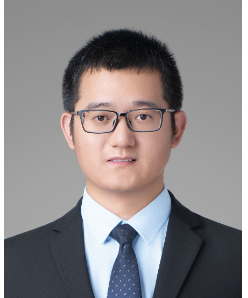


Dr. Changlu Tao is a Principal Investigator at the Hefei National Research Center for Physical Sciences at the Microscale, University of Science and Technology of China (USTC). He earned his Ph.D. from USTC in 2017, followed by postdoctoral training under the joint mentorship of Professor Guoqiang Bi (USTC) and Professor Z. Hong Zhou (UCLA). In 2020, he was appointed Associate Investigator at the Shenzhen Institutes of Advanced Technology, Chinese Academy of Sciences (CAS), before returning to USTC in 2025.
At the forefront of structural neurobiology, Dr. Tao's research integrates state-of-the-art in situ cryo-electron tomography (cryo-ET) with correlative imaging to resolve the molecular architecture of neuronal synapses. His pioneering work has uncovered fundamental biophysical mechanisms underlying synaptic transmission and plasticity, yielding milestone publications in top-tier journals such as Science, Nature Neuroscience, The Journal of Neuroscience, and Neuroscience Bulletin.
An active leader in the scientific community, Dr. Tao serves as the Vice Chair and Secretary-General of the Synapse and Neural Plasticity Branch of the Chinese Society for Neuroscience. His research excellence has been recognized with numerous honors, including the USTC President’s Award for Outstanding Research, the CNS-NeuroXess Young Scientist Award, the Carl Storm International Diversity Award, and a Nature Travel Grant. His laboratory's research is backed by major national funding programs, including the Young Scientist Project of China’s Science and Technology Innovation 2030 (Brain Science and Brain-Inspired Intelligence) Major Program, the National Natural Science Foundation of China (NSFC) Innovative Research Group Program, and the Anhui Provincial Natural Science Foundation.
Synapses are the fundamental processing units of neural circuits. Synaptic transmission and plasticity, the biological substrates of learning and memory, depend on the precise spatial assembly and dynamic remodeling of macromolecular complexes within these sub-micron compartments.
The Tao Laboratory is dedicated to opening the molecular black box of the synapse. By developing and integrating cutting-edge in situ cryo-ET and super-resolution fluorescence microscopy, and combining these with electrophysiology, molecular genetics, and AI-driven data analysis, the laboratory reconstructs dynamic, three-dimensional molecular maps of synapses in their native cellular environments. The goals are to: 1. Decode the structural code of synaptic transmission, learning, and memory; 2. Elucidate the pathological mechanisms underlying neurological disorders. 3. Inspire new paradigms for brain-inspired computing and next-generation artificial intelligence architectures.
Extending beyond neuroscience, the laboratory also applies its high-resolution in situ imaging workflows to perform structural analyses of diverse macromolecular complexes and drive the molecular-level digital reconstruction of entire cells.